
Beard Transplant in Bhopal: Procedure, Healing & Natural Density
Struggling with a patchy beard? Learn how advanced FUE beard transplant in Bhopal delivers sharp, permanent, natural facial hair density with minimal downtime.
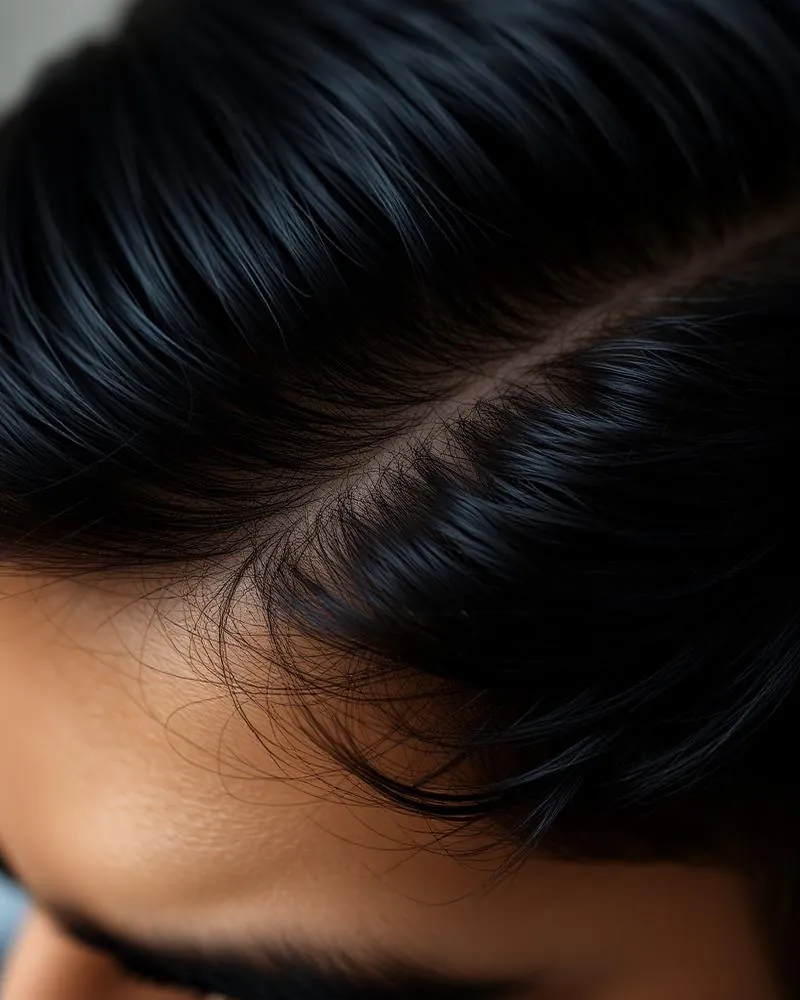
Beard Transplant in Bhopal: Procedure, Healing & Natural Density
A beard transplant in Bhopal is a permanent, minimally invasive surgical solution that restores density to patchy, thinning, or absent facial hair using your own natural hair follicles. Through advanced Follicular Unit Extraction (FUE), healthy individual follicles are harvested from the back of the scalp and carefully placed along the cheeks, jawline, goatee, or mustache at acute angles that mimic natural facial growth. Under local anesthesia, the procedure is comfortable, leaves no linear scars, and produces lifelong, groomable facial hair with primary healing occurring in just 7 to 10 days.
At HT Cosmetic & Trauma Centre in Lalghati, Bhopal, we frequently consult men who have exhausted topical oils, serums, and nutritional supplements without success. Understanding how surgical facial hair restoration works—from graft calculation to final styling—empowers you to make an informed, confident aesthetic decision.
Quick Takeaways: Beard Restoration at a Glance
- Technique: Modern Follicular Unit Extraction (FUE) using microscopic punches (0.7 mm – 0.8 mm).
- Donor Source: The permanent zone at the back of the scalp (occipital area), choosing single- and fine double-hair grafts.
- Primary Downtime: 5 to 7 days for superficial pinpoint crusts to fall off.
- Shedding Phase: Transplanted hair shafts shed at 2–4 weeks ("shock loss"), which is completely normal.
- Permanent Regrowth: New, permanent beard hair sprouts by month 3 to 4, reaching full density and natural texture between months 9 and 12.
- Natural Aesthetics: Requires acute implantation angles (10° to 20°) to ensure hair lies flat against the facial contours.
Why Men Seek Beard Hair Restoration in Bhopal
Facial hair defines the masculine jawline, frames the face, and significantly impacts personal confidence. Across Madhya Pradesh, our clinic has seen a steady rise in young professionals and grooming-conscious men seeking surgical solutions for several key reasons:
- Genetics: Hereditary unevenness, where the beard fails to connect along the cheeks, soul patch, or mustache margins.
- Facial Scars: Scars resulting from childhood injuries, acne, burns, or past surgical procedures that leave barren patches where follicles cannot survive.
- Alopecia Barbae: Localized autoimmune patches that have stabilized but left permanent bare zones.
- Sparse Facial Hair Density: Men desiring a fuller, sharper "stubble" or designer stubble look that topical treatments cannot produce.
While non-surgical treatments like minoxidil or platelet-rich plasma (PRP) can support miniaturized follicles, they cannot create new follicles where none exist. For true absence or dense coverage, a surgical hair transplant remains the gold-standard clinical solution.
The Beard Transplant Procedure: Step-by-Step
Facial hair restoration is technically more demanding than scalp hair transplantation. The skin on the face is mobile, highly vascular, and exposed to constant dynamic movement from talking and chewing. Here is how Dr Pankaj Peswani performs the procedure at our clinic:
1. Facial Mapping and Artistic Hairline Design
Before touching a surgical instrument, we sit with you to map out your desired beard geometry. We examine facial symmetry, cheekbone prominence, and chin structure. Together, we sketch the cheek borders, jawline edges, and sideburn connections to ensure the design flatters your individual features rather than looking unnaturally rigid.
2. Donor Graft Harvesting via Micro-FUE
Under localized numbing, individual follicles are extracted from the back of the scalp. Unlike scalp procedures where multi-hair follicular units (3–4 hairs) are desirable for coverage, beard restoration requires predominantly single-hair and fine double-hair grafts. Placing thick, multi-hair bundles on the cheeks creates a "pluggy," unnatural appearance. Each extracted graft is kept in a chilled, nutrient-rich holding solution to preserve cellular viability.
3. Slit Creation (Angle and Direction)
This step defines the naturalness of your result. Scalp hairs naturally emerge at 45-degree angles, but beard hairs grow almost flat against the skin—often at sharp, acute angles between 10 to 20 degrees.
- On the cheeks, grafts must point downward toward the jawline.
- Along the jawline, they sweep slightly backward toward the angle of the mandible.
- In the mustache and goatee, hairs follow an outward and downward sweep.
Using specialized sapphire micro-blades, ultra-fine slits are created to dictate exact growth direction, depth, and spatial density.
4. Atraumatic Graft Implantation
Follicles are gently loaded and placed into the recipient sites with microscopic forceps or specialized implanters. Utmost care is taken to avoid bending the hair bulbs. Once completed, the donor area is bandaged, while the recipient facial area is left open to air dry and form protective micro-crusts.
[Consultation & Design] ➔ [Micro-Punch FUE Extraction] ➔ [Graft Sorting] ➔ [Flat-Angle Incisions] ➔ [Precise Implantation]
How to Achieve Natural Beard Density
A frequent question from patients looking up clinics near me in Bhopal is: “Will it look like real beard hair or scalp hair stuck on my face?”
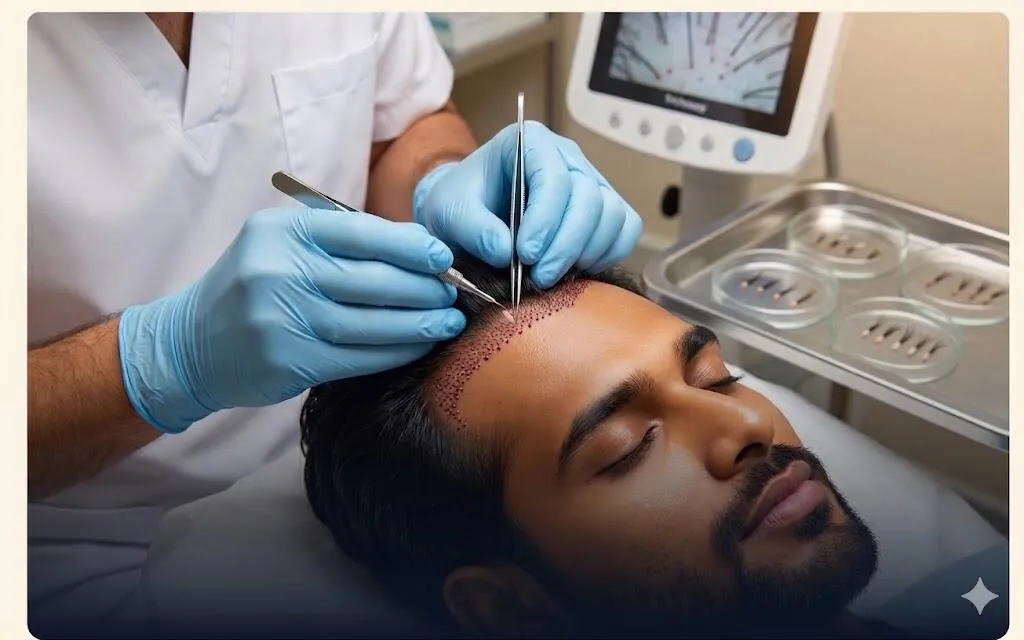
When performed by an experienced hair transplant surgeon, the results are virtually indistinguishable from natural facial hair due to four core clinical principles:
- Selective Extraction: We harvest finer hairs from the lower perimeter of the donor scalp rather than coarse crown hairs.
- Soft Borders: The outer cheekline is feathered using only single, finer hairs. Density gradually builds toward the inner jaw and chin.
- Correct Depth: If implanted too deeply, follicles can cause cobblestoning (small raised bumps); if implanted too shallowly, they fail to take root. Precise micro-depth placement ensures smooth skin healing.
- Biological Adaptation: Over 12 to 18 months, scalp hairs transplanted to the face undergo subtle biological adaptation, gradually becoming slightly coarser and taking on the textural characteristics of surrounding facial hair.
To complement facial density, some patients concurrently explore our hair treatments for early crown or hairline thinning, addressing both scalp and facial aesthetics cohesively.
Recovery, Healing Stages, and Growth Timeline
Recovering from a beard transplant is generally smooth, with minimal pain manageable via mild analgesics for 24–48 hours. Here is the clinical timeline you can expect:
Days 1 to 3: The Delicate Phase
Tiny pinpoint red scabs form around each transplanted follicle. Mild swelling may appear along the lower jaw or cheeks. You must sleep elevated on your back and stick to soft, easy-to-chew foods to prevent excessive facial muscle movement.
Days 4 to 10: Crusting Sheds
By day 5, gentle saline washes soften the crusts. Between days 7 and 10, the micro-crusts naturally wash away during instructed facial cleanses, revealing clear skin with tiny trimmed hairs. The donor area on the back of your head is typically fully healed by day 7.
Weeks 2 to 4: The Shock Loss Phase
Do not panic when the transplanted beard hairs begin falling out. This temporary shedding phase, known clinically as telogen effluvium, is an expected physiological reaction. The underlying dermal papilla and stem cells remain firmly rooted in your skin.
Months 3 to 4: Early Regeneration
Fine, new hair shafts begin emerging through the skin. They may initially appear thin, but they will darken and thicken over the subsequent weeks.
Months 6 to 12: Full Density and Styling
By month 6, significant coverage is visible. Between months 9 and 12, the new beard reaches its final caliber, density, and growth rate. You can now shave, trim, shape, or grow out your beard just like natural facial hair.
Beard Transplant vs. Non-Surgical Treatments
| Feature | FUE Beard Transplant | Topical Minoxidil | PRP Therapy for Beard |
|---|---|---|---|
| Primary Mechanism | Relocates permanent follicles to barren areas | Vasodilator that stimulates existing dormant follicles | Growth factors injected to rejuvenate thinning follicles |
| Effect on Scar Tissue | Highly effective; restores hair over scars | Ineffective (cannot create new roots) | Minimal effect on scarred areas |
| Permanence | Permanent for life | Temporary (reverses after stopping medication) | Requires maintenance sessions every 4–6 months |
| Timeline to Results | 6–12 months for mature density | 4–6 months of daily application | 3–6 months across multiple sessions |
| Best For | Genetic gaps, empty cheeks, scar camouflage | Diffuse thinning with existing peach fuzz | Mild thinning or post-transplant growth support |
If you have miniaturized vellus hair ("peach fuzz"), our medical team, including aesthetic insights from Dr Khushboo Peswani, may recommend a combined approach using topical therapies and regenerative treatments alongside surgery.
Cost Factors for Beard Transplant in Bhopal
The cost of a beard transplant in Bhopal depends primarily on the extent of reconstruction required rather than a flat package rate:
- Number of Grafts Needed: Filling small patches or a mustache gap usually requires 500 to 1,000 grafts. A full cheek-to-jawline beard creation may require 1,800 to 2,500+ grafts.
- Technique Utilized: Advanced manual or motorized micro-FUE that prioritizes graft integrity involves specialized instrumentation.
- Surgeon Expertise: Facial grafting is an aesthetic surgery demanding immense manual skill; having an experienced specialist personally perform the slits and implantation ensures optimal growth.
During your comprehensive consultation at HT Cosmetic & Trauma Centre, we calculate exact graft counts so you understand your treatment pathway clearly without surprise costs.
When to See a Doctor for Facial Hair Thinning
Consult a qualified hair restoration surgeon if:
- You are over 21 years old and your beard pattern has not developed despite general physical maturity.
- You notice circular, smooth bald spots appearing suddenly in your beard (which may indicate active alopecia areata, requiring medical management rather than immediate surgery).
- You have post-acne, burn, or traumatic scarring preventing uniform beard growth.
- Topical hair growth medications cause skin irritation, flaking, or cardiovascular side effects without delivering visible beard fullness.
Take the First Step Toward a Defined Beard
You do not have to settle for an uneven, patchy beard. With meticulous angulation, precise micro-FUE harvesting, and personalized facial mapping, natural density is completely achievable right here in Bhopal.
Ready to map out your new beard line? Book consultation today with Dr Pankaj Peswani at HT Cosmetic & Trauma Centre, Lalghati, Bhopal, and discover what modern hair restoration can do for your profile.
Medical Disclaimer: This article is intended for educational purposes only and does not constitute formal medical advice, diagnosis, or treatment. Individual suitability for surgical hair restoration depends on personal health history, donor supply, and skin condition. Always seek the advice of a board-certified cosmetic surgeon or dermatologist regarding any medical procedure.
Frequently asked questions
Is a beard transplant painful?
The procedure is performed under local anesthesia, so you will feel minimal to no pain during harvesting and implantation. You may feel a slight prick during the initial numbing injections. Afterward, mild soreness or tightness can occur for 24 to 48 hours, which is easily managed with prescribed oral pain relievers.
Can I shave normally after a beard transplant?
You should avoid wet shaving with a razor blade for the first 3 to 4 weeks to protect the newly anchored follicles. Once cleared by our team—typically around week 4—you can trim gently with scissors or an electric clipper. By month 3, you can shave normally with a razor.
How many grafts are needed for a full beard transplant?
Graft counts depend on your starting density and target area. Bridging small patchy gaps or filling sideburns usually requires 400 to 800 grafts. A comprehensive reconstruction covering the cheeks, goatee, and jawline typically requires between 1,500 and 2,500 follicular units.
Will the transplanted beard hair look natural?
Yes, provided the surgeon implants single-hair units at very flat, acute angles (10 to 20 degrees) following the natural direction of your facial contours. At our Bhopal clinic, Dr Pankaj Peswani customizes the angulation and soft boundary lines to ensure the new hair integrates seamlessly with your facial features.
Does beard transplant leave noticeable scars on the face?
No visible scars remain on the face. We create tiny recipient slits using micro-sapphire blades (under 0.8 mm) that heal cleanly without cobblestoning or indentations. In the donor area at the back of your scalp, micro-FUE leaves only pinpoint micro-dots that are invisible under short hair.
Talk to our doctors in Bhopal
Book a private consultation at HT Cosmetic & Trauma Centre, Lalghati, Bhopal — or chat with us on WhatsApp.